
Mountain Gorillas Reproduction and Parenting
Female gorillas mature at 10 – 12 years (earlier in captivity), and males at 11-13 years. A female gets its first ovulatory cycle at the age of six years, and is followed by a two – year’s period of adolescent infertility.
The estrous cycle lasts 30 – 33 days, with outward ovulation signs subtle compared to those of chimpanzees. The gestation period lasts 8.5 months. Female mountain gorillas first give birth at 10 years of age and have four – year inter birth intervals. Males can be fertile before reaching adulthood.
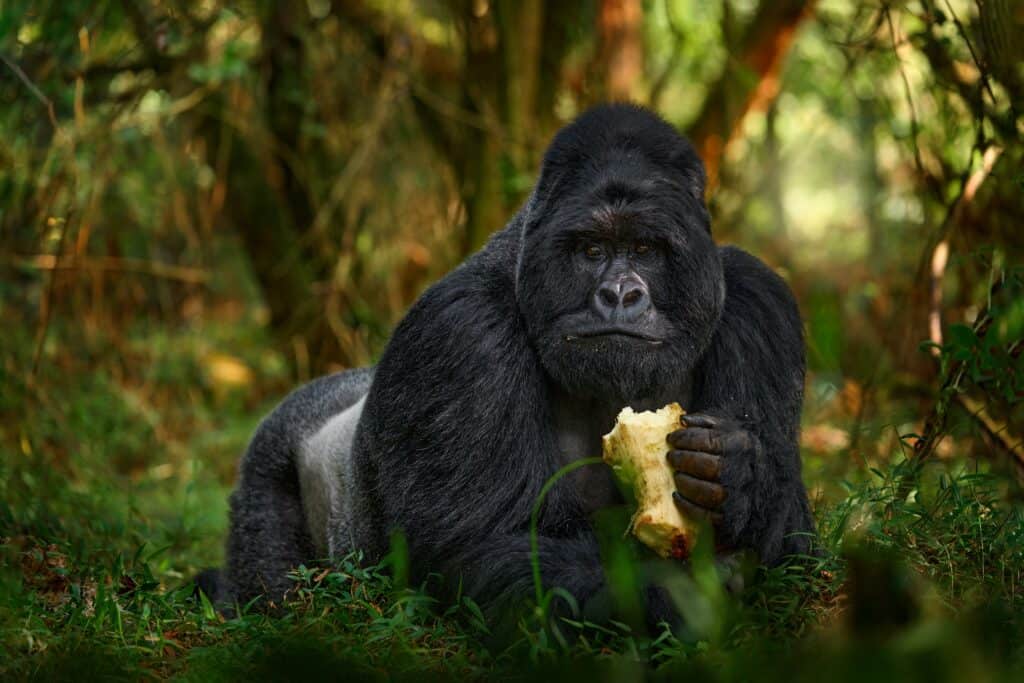
Gorillas mate year round.
Female gorillas will pursue their lips and slowly approach a male while making eye contact, this serves to urge the male to mount her. If the male does not respond, she will try to get his attention by reaching towards him or slapping the group. In multiple – male groups, solicitation indicates female preference, but females can be forced to mate with multiple males. Males incite copulation by approaching a female and displaying at her or touching her and giving a “train grunt’.
Recently, gorillas have been observed engaging in face to face sex, a trait once considered unique to humans and bonobos.
Breeding and Reproduction in Mountain Gorillas
At the age of 15 years, male gorillas start producing and female at 8 years of age. However, gorillas in captivity seem to be ready to mate a couple of years earlier than those in the wild. Unlike some wildlife species, there is no mating season among gorillas, mating can take place at anytime of the year.
After 11 years of age, male gorillas leave the group to start their own groups. At that point they will venture out on their own and often join with other bachelors.
At about 10 years of age, female gorillas leave their initial group and venture alone until she finds a group with dominant male that will let her in. This is part of the nature’s way of preventing inbreeding from taking place within the gorilla family. When a female gorilla is ready to mate, she will give off an odor that the males will pick up on and come for mating.
The mate with females in the same gorilla groups, the male has to fight and defeat the dominant silverback in order to get right to mate. Generally, they will only mate with the females within their own group. There are times when a male is alone and can smell the females ready to mate that are part of another group. Most of the time though these young males decide to back down once the silverback shows signs of aggression. They know they will be no match for his strength.
Gorillas are one of the only animals that are known to engage in different sexual positions like humans do. It takes about 8 and a half months from conception for the gorilla to give birth. It is almost always just one at a time but there are some rare cases of twins as well noted. They are from 4 to 4.5 pounds at birth.
Young gorillas are nursed and cared for by the mother for about the first four years of life. The most interesting thing is that troop leaders who are the big and powerful males have been known to take on the role of caring for orphans that are part of their troop.
Parental Care of Gorillas
Mortality rate in mountain gorillas is as high as 38% during the infancy period (from birth to three years), care givers, primarily females, are acutely important in the survival of their infants. Because of their long period of development and dependence, gorilla mothers can expect to invest years caring for their vulnerable offspring. Although male gorillas do not take an active role in caring for infants, they play an important role in their socialization, often associating with older infants and juveniles. The relationship that develops between the silverback and infants in his group is usually supportive, he serves as an attachment figure during the difficult time of weaning and he protects the young gorillas from intergroup aggression by intervening in disputes involving older, more dominant individuals. The silverback has a largely supportive relationship with the infants in his troop and shields them from aggression with the group.
Infants remain in contact with their mothers for the first five months and mothers stay near the silverback for protection infants suckle at least once per hour and sleep with their mothers in the same nest.
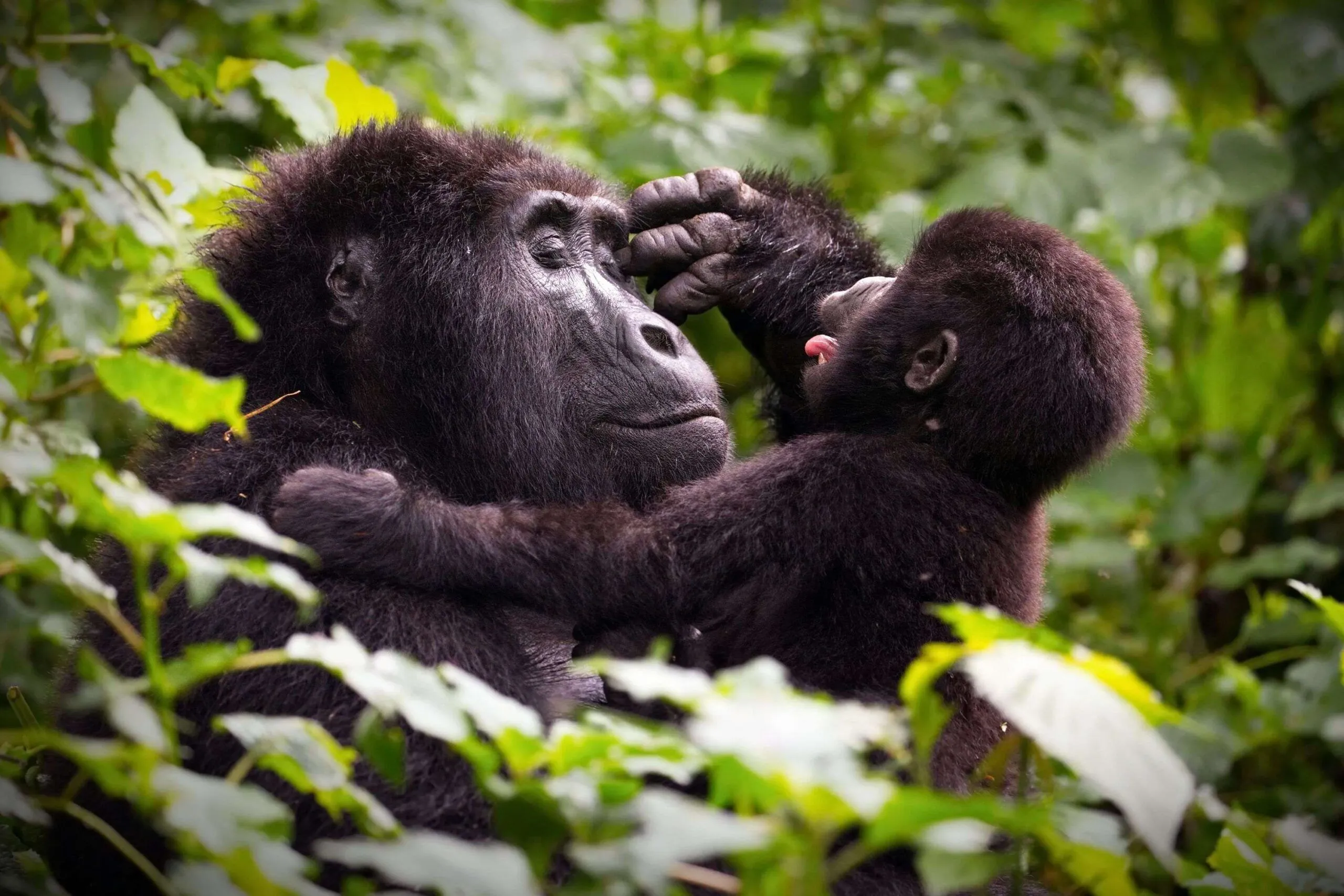
For the first five months of life, infant mountain gorillas remain in constant contact with their mothers and females seek close proximity to their resident silverback for protection. During this period, infants are dependent on their mothers for food, suckling at least once per hour, and sleep at night in their mothers’ nests. After five months, mother-infant pairs break body contact, but only for a few seconds and by 12 months, infants venture up to, but never more than, five meters (16.4 ft) away from their mothers. By 18 to 21 months, this distance between the pair is regular and increases. Co-current with the decrease in nursing frequency, with infants only nursing once every two hours. By the age of 30 months, infants spend only half of their time with their mothers.
The juvenile period is from three to six years and is characterized by a decrease in maternal grooming, no longer sharing a sleeping nest with their mother, and weaning. Because of the enormity of the task of rearing infants and the stress of lactation on the mother’s body, female gorillas experience lactation amenorrhea until the infant is weaned at three or four years. After the infant is weaned, the mother begins to ovulate and shortly thereafter becomes pregnant. Weaning conflict is minimized on gorillas, compared to other great apes, because of the cohesive nature of gorilla groups.
The constant availability of play partners (including the silverback) may contribute to less intense conflict between mother and infant during this period.