
Are gorilla aggressive? Is a commonly asked question by visitors planning a gorilla trekking adventure in Africa. This question often arises from their imposing size and powerful build, which can appear intimidating to those unfamiliar with these remarkable primates.

The reality is that gorillas are not inherently aggressive creatures. Often referred to as the “gentle giants”, gorilla typically exhibit calm, peaceful behavior and live in harmonious troops/ families. However, like any wild animal, gorillas can display defensive aggressive when they perceive threats to themselves as well as their families.
Understanding the nuances of gorilla behavior, the contexts in which aggression occurs, and how to respond appropriate is very important for anyone planning to encounter these gentle giants in the wild.
Nature of Mountain Gorillas
Despite their formidable appearance and tremendous strength, gorillas are fundamentally peaceful animals fond of spending majority of their days engaging in calm activities such as feeding on vegetation, grooming one another, playing and resting. Gorilla groups/troops are led by a dominant silverback male, maintain stable social structure characterized by cooperation and mutual care rather than constant conflict or aggression.
Despite being the protector and the leader of the gorilla family, the silverback demonstrates remarkable gentleness with family members, particularly with infants and juveniles. Often, these dominant males are observed playing carefully with young gorillas, allowing them to climb on their backs and tolerating playful antics that would be considered disrespectful if performed by other adult males. This gentleness extends to interactions with females and subordinate males within the group, maintaining harmony through calm authority rather than constant physical dominance.
Gorillas are primarily herbivorous, feeding on leaves, shoots, stems, bamboo, and fruit. Unlike predatory animals that must develop aggressive hunting behaviors, gorillas have evolved as peaceful foragers. Their dietary needs do not require any form of aggressive behavior toward other animals, which has shaped their generally calm temperament. This herbivorous lifestyle contributes significantly to their reputation as gentle creatures who prefer to avoid conflict whenever possible.
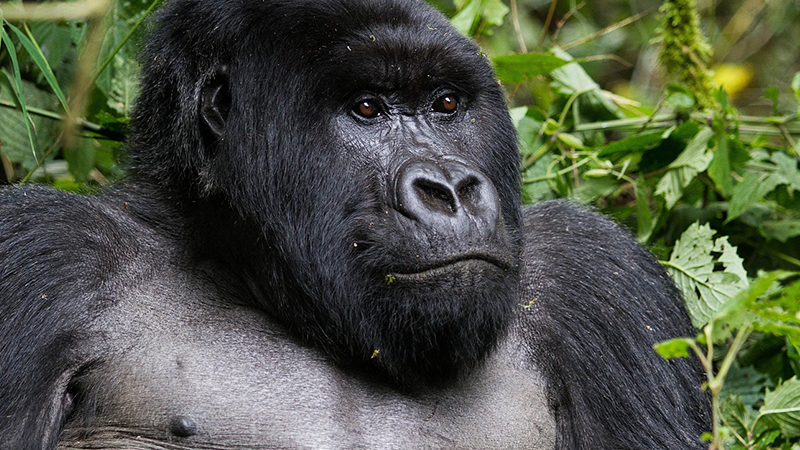
How Gorillas Use Aggression as Communication – Are Gorillas Aggressive?
Aggression as a Social Signal
When gorillas display aggressive behavior, it typically serves as a form of communication rather than an indication of intent to cause harm. These displays are sophisticated methods of expressing dominance, deterring threats, and maintaining social order within the group and with outsiders.
The Bluff Charge: A Dramatic Display of Power
The bluff charge represents one of the most dramatic and misunderstood forms of gorilla communication. When a silverback perceives a threat, he may run at full speed toward the source of concern, covering the ground with powerful strides that shake the forest floor. However, this terrifying display is almost always exactly that – a display.
The silverback will typically stop short of actual contact, having successfully demonstrated his willingness and ability to protect his family. This bluff charge effectively communicates strength and resolve without the risks associated with actual physical combat.
Chest- Beating and its Multiple Functions
Chest beating in mountain gorillas is perhaps the most iconic gorilla behavior and serves multiple communicative functions. Contrary to the popular belief, this dramatic display is not necessarily a sign of imminent attack. Instead, it serves to establish dominance, communicate location to other gorilla groups.
This distinctive sound of chest-beating can be heard over considerable distances in the forest, serving as both a warning to potential rivals and reassurance to family members of the silverback’s presence and vigilance.
Warning Signals Before Escalation
Before resorting to a charge, gorillas typically provide numerous warning signals that escalate in intensity. These may include throwing vegetation, which demonstrate agitation without direct confrontation. Foot stomping creates noise and vibration that communicates displeasure. Loud hooting, roaring, and other vocalizations serve as auditory warnings.
Tearing and displaying vegetation demonstrates strength while creating visual and auditory disturbance. These warnings give potential threats multiple opportunities to retreat before the situation escalates to a bluff charge or, in rare cases, actual physical contact.
Understanding the Triggers of Gorilla Aggression: Are Gorillas Aggressive?
Protection of the Family Group
While gorillas are clam and peaceful by nature, specific circumstances can trigger defensive or aggressive response. Understanding these triggers is crucial for both conservation efforts and safe wildlife tourism. Protection of the family group stands as the primary driver of aggressive behavior in wild gorillas. The fundamental role of the silverback is to ensure the safety and wellbeing of his family, which typically includes several adult females, their offspring, and sometimes younger subordinate males. When the silverback perceives any threat to his group, whether from predators like lions, leopards, human poachers or unfamiliar humans who approach too closely, his protective instincts activate.
This protective aggression is not malicious but rather a natural and necessary response to fulfill his role as the guardian.
Internal Group Dynamics and Dominance Challenges
Internal gorilla group dynamics occasionally involve aggressive displays, particularly as younger males mature and test social boundaries. While the silverback typically maintains authority through his presence and occasional displays rather than violence, conflicts can arise. Young males approaching maturity (silverback status) may challenge the silverback’s authority or compete for mating opportunities with females.
These conflicts usually resolve through displays and posturing, but serious fights can occurs when a rival silverback attempts to take over a group or when two silverback brothers compete for dominance after their father’s death.
Maternal Protection of Infants
Female gorillas demonstrate fierce protective instincts toward their infants, who are completely dependent on material care for several years. Any perceived threat to an infant will trigger immediate defensive aggression from the mother, and potentially from other females and the silverback. This maternal protection is intense during the infant’s first few months and remains strong throughout the early years of development.
Human Provocation as a Preventable Trigger
Human provocation represents an entirely preventable trigger for gorilla aggression. Inappropriate human behavior can create situations where gorillas feel threatened and respond defensively. Actions that commonly provoke defensive responses including making direct and prolonged eye contact, which gorillas interpret as a challenge or threat, approaching too closely and violating their comfort zone, making sudden movements that startle them, and touching or attempting to touch gorillas.
All these behaviors disregard natural gorilla communication and social boundaries.
Are gorillas aggressive? – The Truth about Gorilla Attacks
Despite being portrayed as aggressive animals, the actual gorilla attacks on humans are extremely uncommon. The vast majority of gorilla tourism encounters pass without any aggressive behavior whatsoever. When aggression occurs, it typically consists of displays and bluff charges that stop short of physical contact.
The established gorilla trekking rules and regulations, including limiting group sizes, maintaining distance, limiting vast duration, and requiring the presence of trained guides, have proven remarkably effective at preventing dangerous encounters.
In conclusion – Gorillas really deserve their reputation as gentle giants. Their social complexity, peaceful nature, and remarkable tolerance of respectful human presence demonstrate an intelligence and emotional sophistication that demands our admiration and respect.