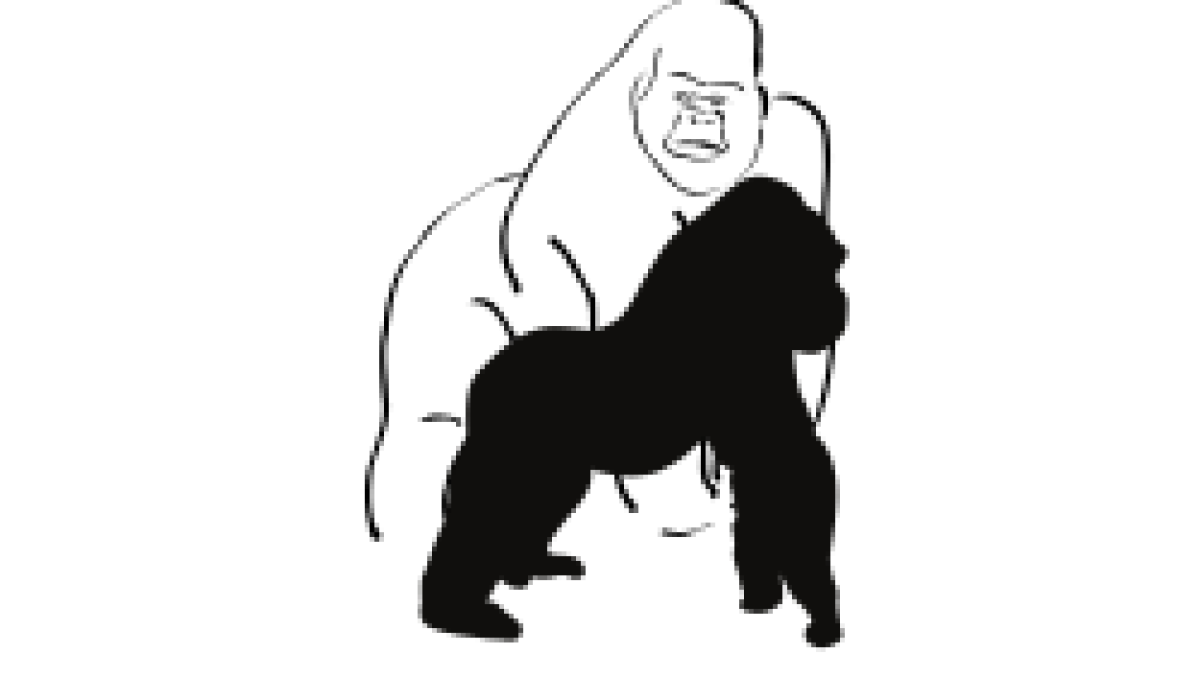
Characteristics of Mountain Gorillas
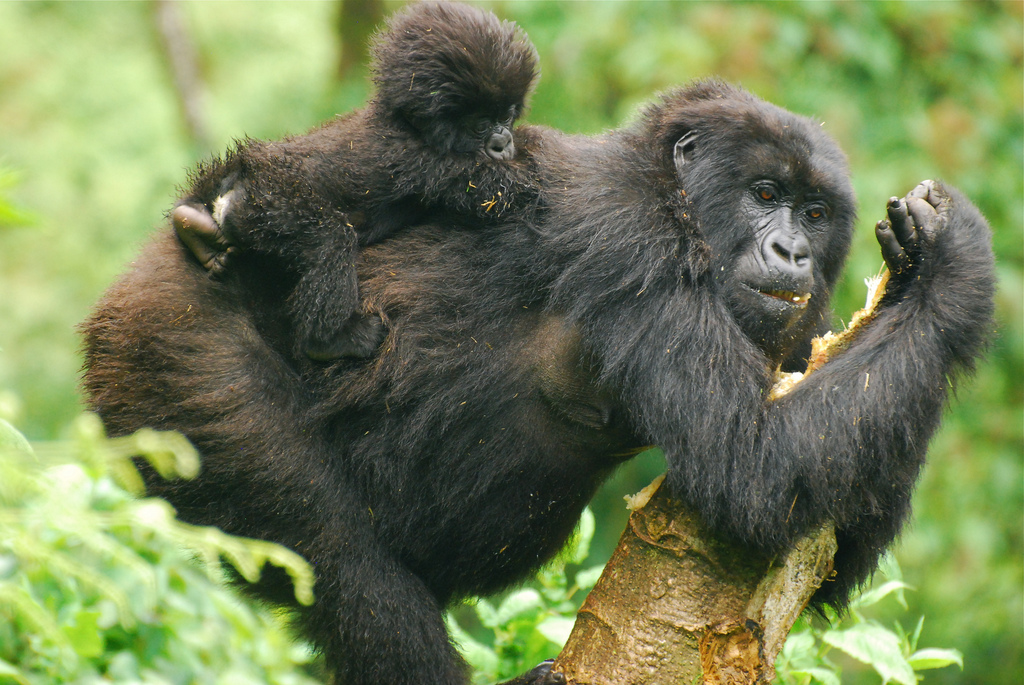
Sharing about 97.8% of their DNA, mountain gorillas are closest relatives to humans and they are listed among the 4 great ape species living in African rainforests, they are largest – a mature silverback male can weigh up to 600 pounds.
Besides the sharing the DNA between humans and gorillas, ecological and social research shows that both wild and habituated gorillas live and maintain their distinct social groups/families.
In the wild, gorillas live in families/troops of a minimum of 2 individuals (male and female) while the highest gorilla family size can have more than 30 individuals. A gorilla family consists of females, juveniles and infants led by a dominant silverback which commands all activities like feeding, relaxing and sleeping and moving within a habitat range. Silverbacks normally defend particular habitat ranges and when groups meet, often fight or ignore each other.
Sometimes a single gorilla family may have more than 2 silverbacks, though they tend to be aggressive towards one. In some cases, silverbacks often fight until the strongest silverback takes control of its family. When young males mature, they often go off and create their own families.
Here are some of the characteristics of mountain gorillas
-
Mountain Gorillas are only found in the rainforests of East Africa
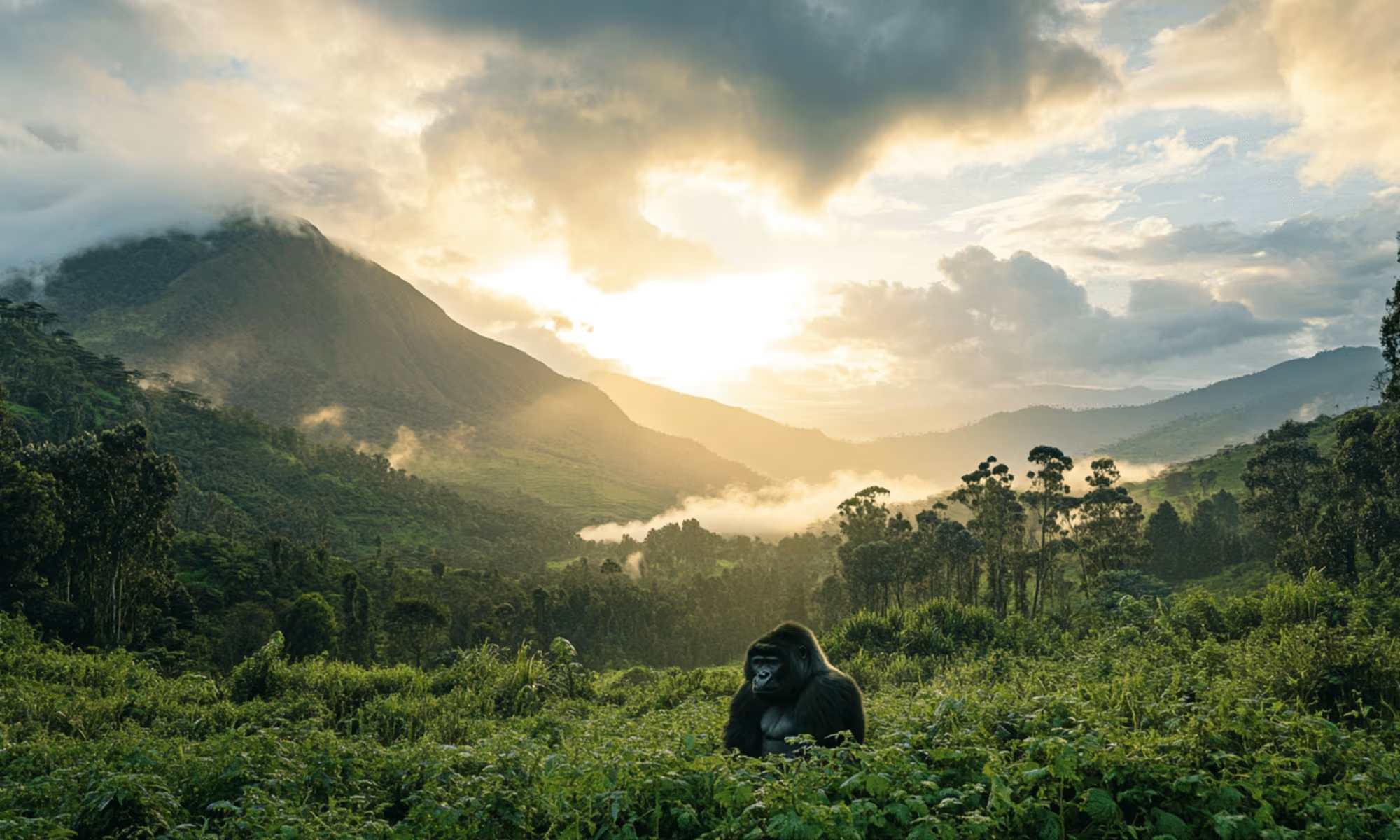
Mountain gorillas live in the high-altitude forests of the Virunga Mountains, which span the borders of Rwanda, Uganda and the Democratic Republic of Congo. These forests are characterised by dense vegetation, steep slopes, and high rainfall, which provide the perfect habitat for gorillas o thrive.
The mountain gorilla population is estimated to be around 1,063 individuals, which makes them one of the most endangered species in the world.
Mountain gorillas are divided into two populations, the Virunga population and the Bwindi population. The Virunga population is divided into three subpopulations, with around 604 individuals, while the Bwindi population has about 459 individuals.
-
Mountain Gorilla distinguished by distinctive features
Mountain gorillas are distinguished from others by their distinctive features that is shape and wrinkles in the nose, actually they are called nose prints, and times it is hard to tell if a mountain gorilla has a tail, and well mountain gorillas do not have tails like the monkeys.
-
Mountain Gorillas have larger muscles and longer arms
Mountain gorillas have larger muscles in their arms than in legs and this is because they use their arm strength for gathering and bending although they often walk on their four limbs.
The arms are longer than the legs, they have about 30 cm arm span longer than that of humans. Their upper body is 6 times powerful than that of humans, the body enables them to squeeze and lift heavy objects.
-
Mountain Gorillas have 32 teeth
Mountain gorillas have 32 teeth – the same like human beings. The teeth are large and strong which can break down the vegetation they consume. They develop big, sharp teeth as they mature into adults. Their type of set of teeth is similar to that of humans, during their lifetime they develop milk teeth which are later replaced by their permanent set of teeth.
-
Mountain Gorillas live in a family
Mountain gorillas are social animals living in groups/families led by a dominant silverback. The family is led by a silverback. When a male gorilla acquires silver-grey hair across the bark, the hair differentiates it from other gorillas which have dark skin and black to brown-grey hair.
A dominant silverback decides where the family is going to feed, sleep and move to.
-
They have a lifespan of 30-40 years in wild
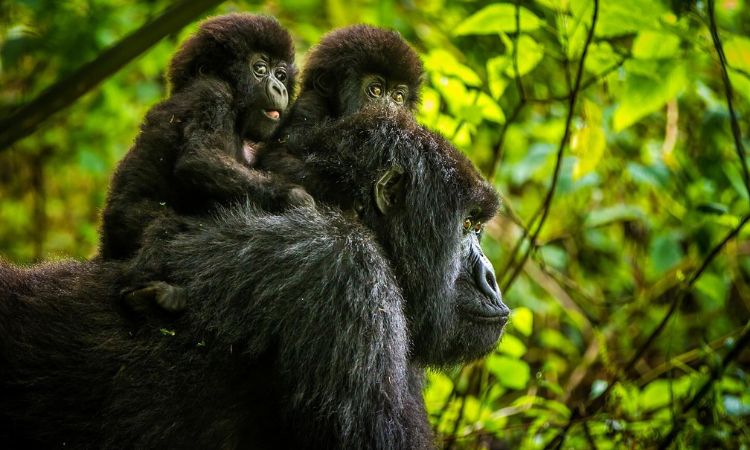
Mountain gorillas have a lifespan of 30 -40 years in the wild, during their life span a female goes through a gestation period of 8 months, giving birth to one or two infants every after two years.
-
Gorillas feed in vegetation
Mountain gorillas feed on vegetation, fruits and leaves during their long day of move, during the night hours they display their nests for resting.
-
Mountain gorillas have a distinctive shape
Mountain gorillas have a distinctive, the stomach is larger than their chests. Their stomach size is larger because of their intestines, which contain the bulky vegetables they consume.
-
Mountain gorillas have a unique form of communication
Mountain gorillas have a unique form of communication called chest-beating, which they use to intimidate rivals and establish dominance.
-
Mountain gorillas vulnerable to human diseases
Mountain gorillas are vulnerable to human diseases and can contract illnesses such as the common cold and flu from humans. As a result, visitors to their habitat are required to wear masks and keep a safe distance from gorillas.